Security Chiefs Identify Escaped Inmates and Stolen Weapons as Key Threats Ahead of March Polls
KATHMANDU, November 3
Nepal’s top security officials have identified escaped inmates and stolen weapons as major threats to maintaining peace and order during the upcoming parliamentary elections scheduled for March 5.
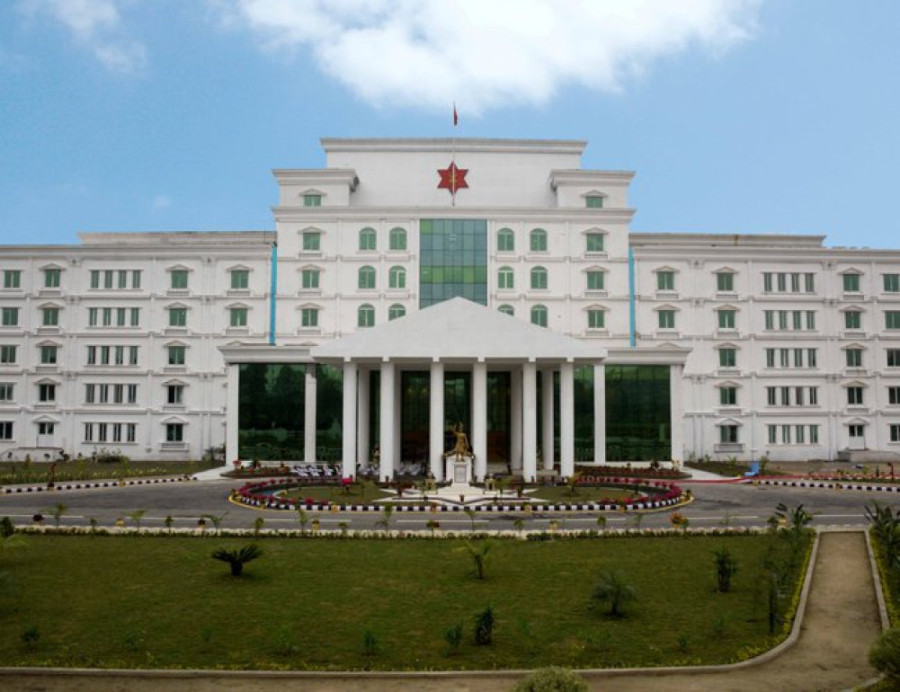
During a high-level security review and election preparedness meeting held at the Nepali Army Headquarters on Sunday, the chiefs of the national security agencies highlighted growing security risks following the September 9 prison break incidents and arms thefts across the country. They stressed the need for both independent and coordinated operations to recover stolen arms, recapture fugitives, and contain groups threatening public safety.
The meeting was chaired by Chief of Army Staff (CoAS) Ashok Raj Sigdel and attended by Inspector General (IG) of Nepal Police Chandra Kuber Khapung, IG of the Armed Police Force Raju Aryal, and National Investigation Department (NID) Chief Tekendra Karki. Discussions focused on assessing the national security situation and refining election security strategies.
An official present at the meeting said the chiefs provided updates on ongoing operations, noting that the escaped prisoners and missing weapons remain the top concerns. “Security agencies are under pressure to restore confidence among citizens ahead of the polls,” the official said.
In recent weeks, the Nepal Army, Nepal Police, and Armed Police Force have been conducting joint patrols nationwide to stabilise law and order.
“The situation has been tense since the September unrest, which affected the morale of security personnel,” a senior army officer said.
“Joint patrols have helped rebuild coordination, restore normalcy, and reassure the public. Sunday’s meeting focused on sustaining these efforts in the run-up to the elections.”
The agencies have also agreed to set up election security command posts to coordinate deployments and responses, with a follow-up review planned for the next inter-agency meeting.
Ensuring a free, fair, and secure election poses a major challenge amid widespread destruction and missing resources. During the September unrest, more than 1,200 police firearms and 100,000 rounds of ammunition were looted, with over 500 weapons still unaccounted for.
Out of 14,043 inmates who escaped from 28 prisons and juvenile centers, more than 5,000 remain at large. Over 400 police stations and offices were burned or vandalized, with many still operating from temporary or damaged buildings. The Armed Police Force also reported damage to 62 facilities, while property losses across security agencies are estimated at over Rs 220 million.
The Nepali Army has faced criticism for failing to protect key government and political sites — including Parliament, the Supreme Court, the President’s Office, Singha Durbar, and several party headquarters — that were targeted during the unrest.
In light of these challenges, Sunday’s meeting underscored the urgent need to strengthen national security, enhance inter-agency coordination, and restore public confidence ahead of the March elections, according to senior police officials.
Share this content:






Post Comment