Electric Two-Wheeler Revolution in Kathmandu: Are EVs Set to Overtake Petrol Bikes?
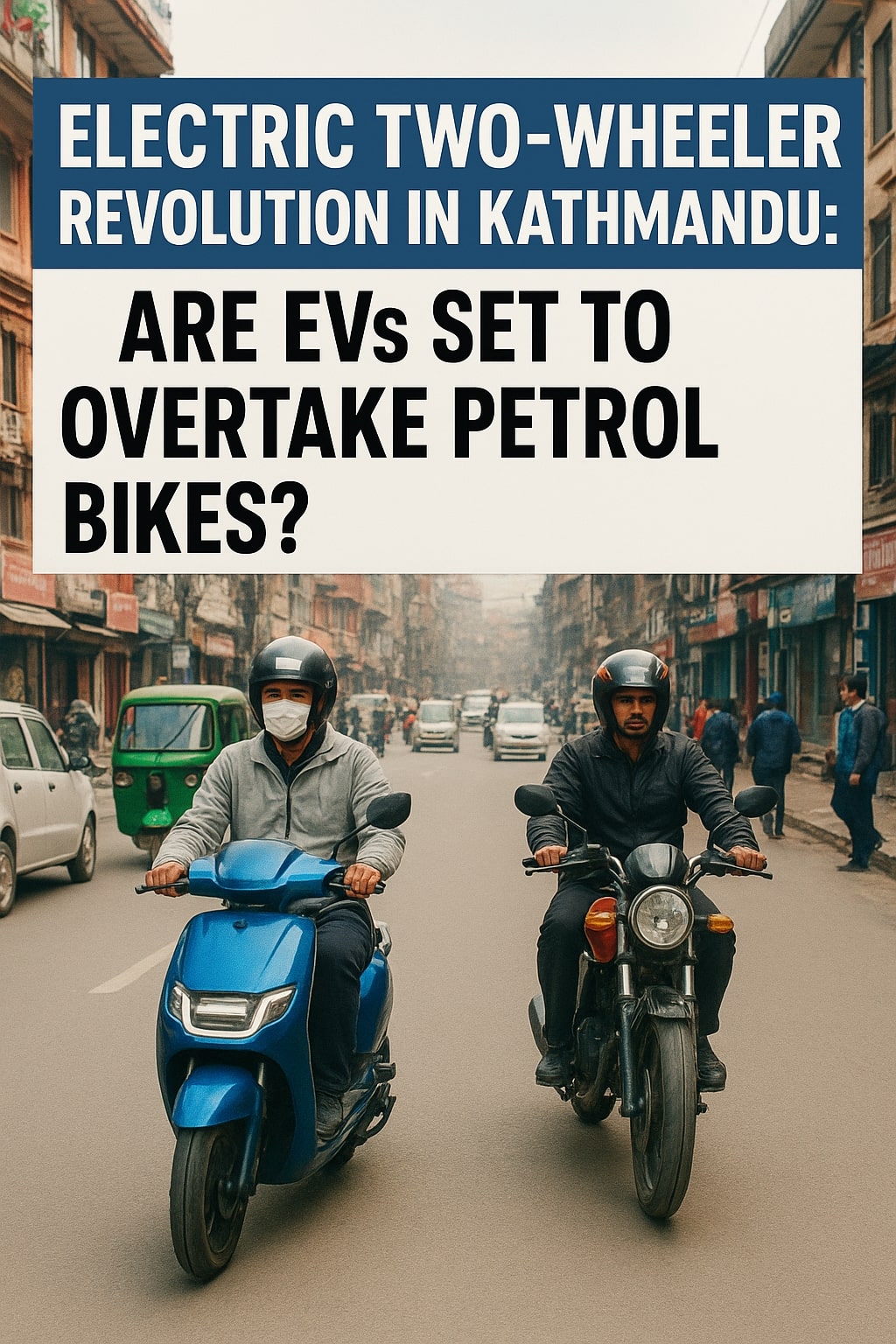
KATHMANDU, Oct 26, 2025 — The streets of Kathmandu are witnessing a quiet yet powerful transformation. Once dominated entirely by petrol-powered scooters and motorcycles, the city’s two-wheeler landscape is now being reshaped by the rise of electric vehicles (EVs).
A Growing Shift Toward Electric Mobility
For decades, petrol bikes have been the backbone of urban transportation in the Kathmandu Valley — reliable, affordable, and supported by an extensive service network. But recent years have seen a dramatic surge in electric two-wheeler sales, fueled by rising fuel costs, worsening pollution, and greater environmental awareness among urban commuters.
Electric scooters and motorcycles, once seen as niche or experimental, are now becoming mainstream. Brands like NIU, with their smart, energy-efficient scooters, are capturing a growing share of the market. A typical daily commute that once cost hundreds of rupees in petrol can now be done for just a few rupees in electricity, a powerful economic incentive for consumers.
Global and Local Players Powering the Market
The electric two-wheeler market in Nepal is now a battleground between international brands and domestic innovators.
- Global names such as NIU, TVS (iQube), Ather, Segway, and Yadea are offering technologically advanced, reliable models that address battery performance and durability concerns.
- Nepali brand Yatri Motorcycles has taken a bold step forward with its high-performance, locally designed electric bikes tailored for Nepal’s terrain. Yatri’s premium models are changing perceptions, showing that EVs can be both powerful and stylish, rivaling traditional petrol sports bikes.
Battery Swapping and Charging: Solving Range Anxiety
One of the biggest challenges for EV adoption remains range anxiety and charging time. But Kathmandu’s evolving battery-swapping infrastructure is changing that equation.
Companies like Gogoro have introduced automated battery-swap stations across the Valley, allowing riders to exchange depleted batteries for fully charged ones in seconds, just as fast as refueling a petrol tank. This system has proven particularly beneficial for delivery riders and commercial users, where downtime equals lost income.
For other EV users, home and workplace charging options have become increasingly common. Meanwhile, public charging points are expanding, supported by dealerships and private investments, reducing barriers for everyday riders.
Economic and Environmental Advantages
Nepal’s abundant hydropower resources give it a unique advantage in adopting electric mobility. By using clean, locally generated electricity, the nation is cutting down on fossil fuel imports, saving billions on its annual trade deficit.
Government incentives, including lower import duties and tax benefits on EVs, further make electric two-wheelers an affordable and attractive choice.
Environmentally, the impact is equally significant. As thousands of petrol bikes are replaced with zero-emission EVs, Kathmandu’s air quality, often ranked among the worst in South Asia, stands to improve dramatically.
The Road Ahead
The Electric Two-Wheeler Revolution in Kathmandu is not just a passing trend, it’s a transformational shift in urban mobility. While petrol bikes still dominate in sheer numbers, the momentum behind electric scooters and motorcycles is undeniable.
With strong market players like NIU and Yatri, expanding charging and swapping networks, and clear economic and environmental benefits, the city is on the brink of an all-electric future.
The question is no longer if EVs will overtake petrol bikes in Kathmandu but when this revolution becomes the new normal.
Share this content:







Post Comment