Bangladesh Youth Express Strong Voices Ahead of February Elections
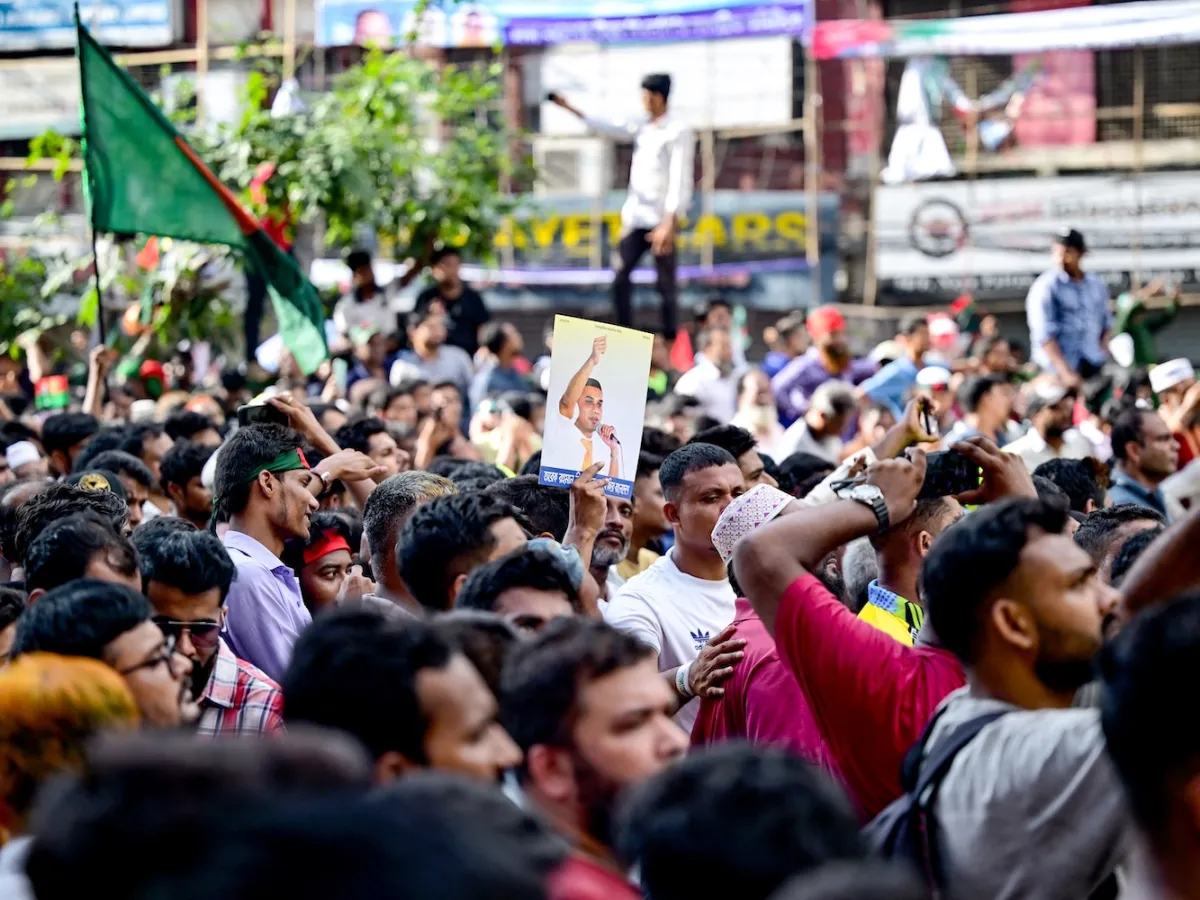
In the months following the July 2024 political upheaval in Bangladesh, the country’s streets and campuses have become vivid canvases of expression. Graffiti, witty, sometimes poetic, sprawls across walls and corridors, reflecting the energy of a generation that played a prominent role in the uprising which led to the resignation of Sheikh Hasina after 15 years in power. Once hailed as a pro-democracy icon, Hasina’s critics had grown concerned over her increasingly centralized leadership. Following her resignation, she relocated to India, where she currently resides in exile.
The atmosphere in university campuses captures a mix of activism, curiosity, and civic engagement. Students gather in small groups to debate politics, exchanging ideas and opinions that often extend beyond Bangladesh’s borders. On one unkempt lawn, red lanterns swing above a modest Chinese New Year celebration a subtle sign of the ongoing regional contest for influence, with Beijing and Delhi both seeking stronger ties with Dhaka. For many of these students, the upcoming 12 February elections will mark their first real experience with casting a vote.
Leadership in the interim period has seen Nobel Peace Prize laureate Muhammad Yunus take charge, tasked with guiding the country through a politically sensitive transition. Meanwhile, the former prime minister, Sheikh Hasina, faces a death sentence imposed in absentia related to the 2024 security crackdown, which the UN estimates resulted in around 1,400 deaths, predominantly caused by security forces. Her Awami League, which had commanded roughly 30% of the popular vote, has been barred from contesting the upcoming elections. Political analysts note that the main opposition, the Bangladesh Nationalist Party (BNP), is attempting to occupy the liberal-centrist space left open by Hasina’s absence, while the main Islamist party, Jamaat-e-Islami, has aligned with a newer student-based party born from the uprising.
Campus slogans and public messages increasingly reflect a broader regional awareness. Among young Bangladeshis, phrases like “Dhaka, not Delhi” are common, appearing on walls, in street art, and even stitched onto saris, highlighting concerns about India’s influence. Words like “hegemony” have become part of everyday conversations, signaling the way the younger generation interprets historical and contemporary regional dynamics. For many students, political engagement is not just about domestic governance but also about asserting national independence in the context of regional powers.
Observers note that the current political landscape in Bangladesh is shaped by a unique combination of generational activism, digital connectedness, and a keen awareness of international influences. Young voters are closely watching how interim leadership navigates challenges while balancing domestic expectations and external pressures. Many express a desire for fair elections, strengthened democratic processes, and a government that can reflect the interests and aspirations of the younger population.
As the country prepares for the February elections, the energy of Bangladesh’s youth underscores a new chapter in civic participation. Their voices, both on campus and in wider society, suggest a growing emphasis on transparency, accountability, and the ability of citizens to influence policy and leadership decisions. How this engagement will translate into election outcomes remains to be seen, but the involvement of a politically aware, regionally conscious younger generation is shaping the discourse in ways that are likely to have long term implications for Bangladesh’s democratic development.
Share this content:

Post Comment