CIAA Launches Probe into Tribhuvan University Land Encroachment
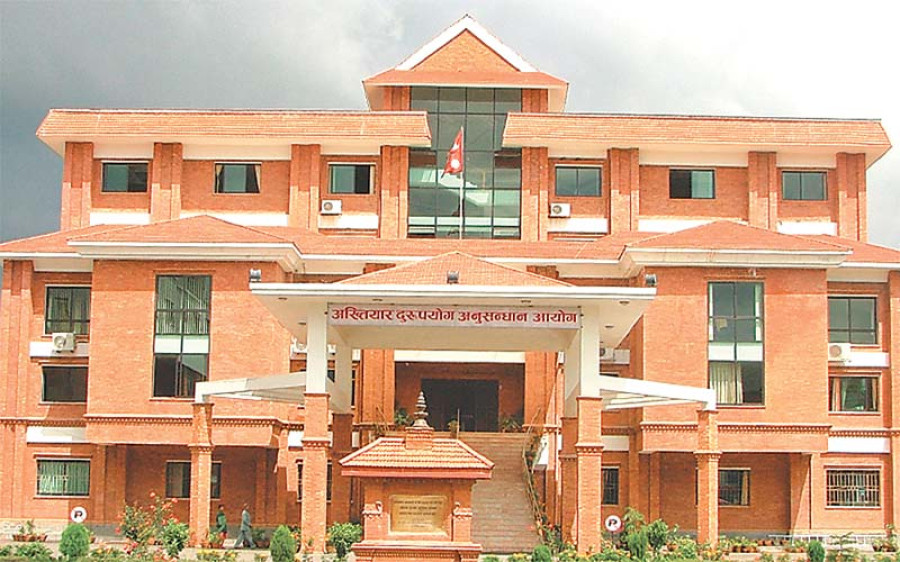
Kathmandu, Nov 13: The Commission for the Investigation of Abuse of Authority (CIAA) has initiated an investigation into the large-scale encroachment and misappropriation of land at Tribhuvan University (TU), the country’s oldest and largest university.
The government-formed TU Land and Assets Investigation Committee 2024 reported that approximately 2,539 ropani (≈1.29 million m²) of university land has been encroached. The committee has recommended that those responsible face legal action.
Investigation Underway
CIAA spokesperson Rajendra Kumar Paudel stated that the Ministry of Education, Science and Technology’s report has been largely reviewed, and additional evidence has been requested. “Once the investigation begins, appropriate action will be taken,” he said.
The committee, chaired by former secretary Mahendra Kumar Thapa, suggested that both the CIAA and the Central Investigation Bureau (CIB) investigate the encroachers. Among the cases flagged is the alleged attempt by Kirtipur’s Laboratory Secondary School to seize TU land using forged documents.
TU Registrar Kedar Rijal confirmed that the CIAA has requested relevant land documents, with some already submitted and others in process. A TU official said that documents relating to 108 ropani (≈54,942 m²) of land used by the Lab School are being compiled for submission to the CIAA.
Prime Minister Calls for Swift Action
On Tuesday, Prime Minister Sushila Karki, who also serves as TU’s chancellor, held a meeting to review progress on reclaiming encroached land. The session was attended by Finance Minister Rameshwar Khanal, Home Minister Om Prakash Aryal, Education Minister Mahabir Pun, Communication Minister Jagdish Kharel, and senior TU officials including Vice-Chancellor Deepak Aryal and Registrar Kedar Rijal.
The prime minister urged authorities to halt any attempts by unrelated parties to occupy, sell, or misuse TU land and instructed that “those responsible, whoever they may be, must be brought to court immediately.”
TU officials stressed the need for government support to reclaim encroached land. Home Minister Aryal suggested that the university lead the recovery process while the CIB handle cases involving forgery. TU is preparing a detailed work plan to implement the committee’s recommendations, with support from the Prime Minister’s Office, home and education ministries, CIAA, and police.
Extent of Encroachment
The committee’s report revealed that of the 5,218 ropani (≈2.65 million m²) acquired by TU in 1956 and 1973, nearly 2,539 ropani has been encroached. Within the Kirtipur central campus, 1,843 ropani (≈937,083 m²) has been reduced or misused, while 696 ropani (≈354,085 m²) outside Kirtipur has also been encroached.
Of the central campus land, 843 ropani (≈428,849 m²) is occupied by 21 institutions and groups, and TU’s constituent campuses in the Kathmandu Valley have lost 148 ropani and 15 aana (≈75,716 m²). Field surveys of 18 of 22 campuses found around 150 ropani (≈76,308 m²) encroached across seven campuses, bringing the total across Kathmandu, Lalitpur, and Bhaktapur to 1,253 ropani (≈637,420 m²).
Specific Cases and Forgery Allegations
The Lab School allegedly occupied 108 ropani (≈54,942 m²) of TU land and submitted forged documents to the Land Revenue Office in Kalanki claiming ownership. The Radha Soami Satsang Vyas Nepal religious institution is reported to have occupied 15 ropani (≈7,631 m²) illegally. Some organizations leased TU land to third parties for hotels and petrol pumps.
The report also cited negligence by TU staff and collusion with political leaders as contributing factors. “Political pressure, influence, and personal interests dominated the distribution of TU land,” the committee noted. Ambiguous laws and policies were also identified as key reasons behind the misappropriation.
The CIAA investigation is expected to focus on bringing all parties responsible—including school management, university staff, and officials involved—to justice under existing laws.
Share this content:





Post Comment