Third Trans-Himalayan Forum Begins in Kathmandu, Focuses on Digital Cooperation and Regional Governance
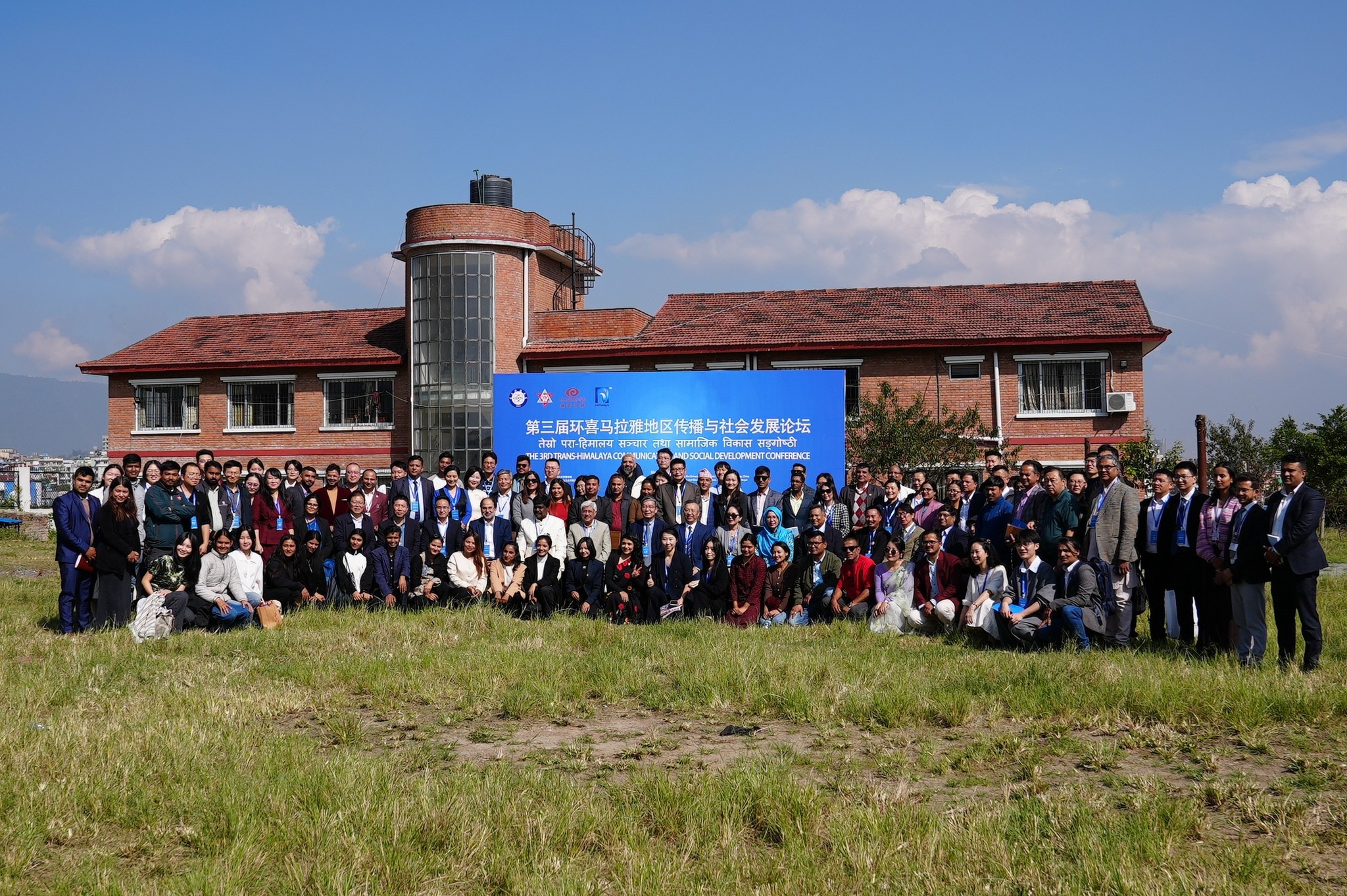
Kathmandu, November 8
The third edition of the Trans-Himalayan Forum on Communication and Social Development opened in Kathmandu on Friday, convening more than 150 scholars and practitioners from nine countries to explore digital technology, governance, and cross-cultural collaboration in the Himalayan region.
The three-day event is jointly organized by the University of Electronic Science and Technology of China (UESTC), Kangba TV (China), Tribhuvan University, and Himalaya Television under the theme “Peripheral Digital Communication and Regional Public Governance.” Participants from China, Nepal, the United States, India, Bhutan, Bangladesh, Pakistan, Sri Lanka, and Japan have submitted over 60 research papers.
This year’s forum also aligns with two diplomatic milestones: the 70th anniversary of China–Nepal relations and the 75th anniversary of China–India ties.
A key highlight of the opening ceremony was the launch of the Research Center for Digital and Intelligent Public Governance in the Pan-Himalaya Region, a collaborative initiative between UESTC and Tribhuvan University aimed at promoting joint research and policy innovation.
Speakers addressed diverse issues including AI governance, digital storytelling, and women’s empowerment. Professor Manukonda Rabindranath of Jawaharlal Nehru University shared insights on AI-powered fact-checking tools, while Bhutanese researcher Dawa Penjor introduced the concept of a “Gelephu Mindfulness City.” Professor Chen Changfeng of Tsinghua University examined how online algorithms shape social cognition.
Women’s representation in digital and traditional media was another prominent theme. Deepika Pant of India highlighted the resilience of Pahari women facing environmental and social shifts, and Kangba TV host Qimi Wengmu emphasized the media’s responsibility in amplifying women’s voices.
Regional cooperation featured strongly throughout the discussions. Professor Taibur Rahman from the University of Dhaka presented cross-border case studies linking Bangladesh, Bhutan, China, and Nepal, while Japanese photojournalist Hiroyuki Torii demonstrated how visual narratives foster cultural understanding. Pakistani academic Abida Ashraf underscored the need for deeper collaboration within South Asia’s media sector.
Tribhuvan University’s Vice-Chancellor called for stronger academic partnerships during a time of global uncertainties, and UESTC Dean Professor Ding Huang described the forum as a “digital bridge to share knowledge and confront shared challenges.” Professor Han Hong, Director of the Center for Trans-Himalayan Communication Research, outlined a proposed Seven-Point Initiative to build greater regional consensus.
The event also featured side exhibitions, including the “Mysterious Charm of Sichuan · Cultural China” book display and a “Trans-Himalayan Customs” photo exhibition celebrating the cultural and environmental richness of the Himalayan region.
First hosted in Chengdu in 2018 and later in Kathmandu in 2024, the Trans-Himalayan Forum continues to strengthen academic dialogue and promote people-to-people connections across the region.
Share this content:







Post Comment