Chhath Celebration Beyond Nepal’s Border
Kathmandu, October 27
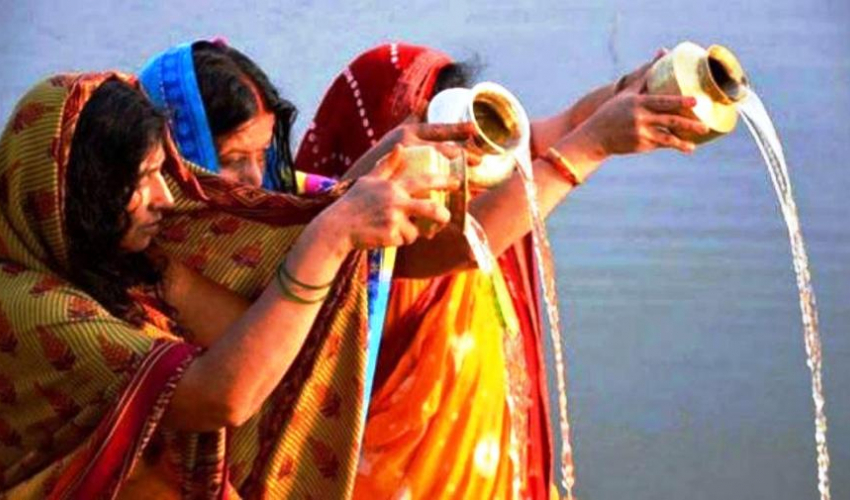
From the sacred banks of the Lakhandei River in Sarlahi to artificial ponds in London, Doha, and New York, millions of devotees gather each year to celebrate Chhath, one of the world’s oldest and most eco-conscious festivals. Rooted in the mythology of Sita and Ram, Chhath represents humanity’s gratitude toward the Sun, nature, and life itself.
Yet, paradoxically, in Nepal, the land of Sita’s birth, Chhath remains under recognized as a national festival, even as its message of equality and environmental harmony resonates across borders.
Origins: The Festival of Sita and the Sun
According to the Ramayan, Sita, the princess of Mithila, was the first to observe Chhath Puja, offering prayers to Surya Dev (the Sun God) for life, prosperity, and family well-being. This ancient act of devotion evolved into a deeply symbolic festival that has endured for centuries across Mithila and Awadh, regions that today stretch through southern Nepal and northern India.
In Nepal’s Madhesh Province, Chhath is more than a ritual, it is heritage, identity, and intergenerational devotion. Passed from mothers to daughters, it reflects a timeless bond between faith, water, and sunlight, celebrated along the tranquil banks of rivers and ponds.
Faith and the Four Sacred Days of Chhath Puja
The four-day-long Chhath festival begins on Govardhan Puja, unfolding through rituals that embody purity, gratitude, and discipline.
- Nhay-Khay (Bath and Eat): Devotees begin by purifying themselves through a ritual bath and consuming satvik food, often cooked in khari, the residue from oil pressing, symbolizing purity and self-reliance.
- Kharna: A day-long fast is observed, broken at sunset with kheer (rice pudding) and other saltless offerings shared among family and neighbors.
- Sajhiya Ghat (Evening Argha): Devotees, dressed in new clothes, gather on decorated riverbanks adorned with banana leaves, paper decorations, and clay lamps. They offer argha (sacred water) to the setting sun and spend the night in songs, music, and prayers.
- Bhorbha Ghat (Morning Argha): Before sunrise, prayers and offerings are made to the rising sun, completing 36 hours of fasting and worship.
When clouds obscure the sun, devotees create a symbolic sun, “Shreesapta,” showing that faith continues even without visibility. Offerings such as Thekuwa, Kasar, Khajuriya, and seasonal fruits fill baskets, all placed on banana leaves, reinforcing the festival’s sustainable essence.
A Festival Beyond Caste, Class, and Religion
Chhath has become a festival that transcends social, cultural, and religious boundaries. Along the riverbanks of Janakpur, Birgunj, and throughout Madhesh, Hindus and Muslims stand side by side, united by devotion.
Unlike many other Hindu rituals, Chhath requires no priest, every devotee performs their own worship. Anyone, regardless of gender or social standing, can take part. Increasingly, even Nepalis from hilly and Himalayan regions have joined the observance, making Chhath a true symbol of national harmony and inclusiveness.
This egalitarian spirit makes Chhath one of the most democratic faith traditions in the world, an indigenous celebration of nature, equality, and devotion.
The Global Journey of Chhath
Migration has carried the festival far beyond Nepal’s plains. Today, the Madheshi and Bihari diaspora recreate their ancestral ghats in foreign lands, from community parks in the Gulf to riversides in London and New York. Artificial ponds, banana leaf decorations, and the familiar melodies of Chhath Geet reconnect them to their roots, sunlight, and soil, wherever they live.
This global revival of Chhath not only preserves tradition but also symbolizes cultural resilience and belonging among expatriate communities.
The Irony of Limited Recognition in Nepal
Despite its historic and cultural depth, Chhath has yet to be fully recognized as a multi-day national festival in Nepal. Currently, the national calendar acknowledges only one day, the Sajhiya Ghat (evening worship), even though the full celebration spans four sacred days.
In Madhesh Province, two days are recognized as public holidays. However, in other provinces, schools and government offices remain open even during fasting and worship, a situation that many call “culturally unfair.”
Repeated proposals to extend the public holiday have reached Nepal’s Parliament, with activists, local leaders, and students demanding equal recognition for this ancient festival.
A Call for Equal Sunlight
“The sun shines equally on everyone,” say the people of Madhesh, and that belief captures the very essence of Chhath Puja.
For a country that prides itself on inclusivity and diversity, recognizing Chhath as a national multi-day festival is more than symbolic. It is a test of equality and federal respect for all Nepali communities.
Acknowledging the full celebration in the national calendar, educational institutions, and government offices would affirm that Nepal’s unity thrives not through sameness but through celebrating its cultural diversity.
From the riverbanks of Janakpur to the waters of the Thames, Chhath continues to rise each year, with every lamp lit, prayer sung, and sunrise welcomed. The sun will always rise again; the question is whether Nepal will finally open its eyes to its light.
Share this content:





Post Comment